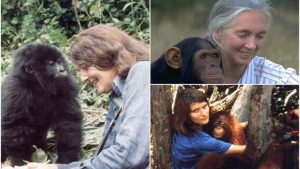
The concept of “education” is often surrounded by misunderstandings. A clearer perspective can be achieved by referring to its etymology and integrating fundamental insights from mammalogy. Education should not be regarded solely as an intellectual practice or the transmission of social etiquette, nor can it be considered an exclusively human phenomenon, unless we choose to disregard the foundational contributions of Darwin.
It is worth noting that educere, understood as assistance in the construction of identity foundations, can already be observed as early as the Permian Period and is now acknowledged even in dinosaurs, the ancestors of modern birds.
In mammals, parental care constitutes the archetypal framework, the foundational apprenticeship through which the basic coordinates of identity are shaped. It is therefore reductive to interpret care only in terms of nourishment, protection, or shelter, as if it were a welfare model applied to milk-bearing creatures. Feeding is intrinsically tied to education: notably, the term alumnus derives from the Latin alere, meaning “to nourish.” Parental care is, above all, a form of education.
What, then, is education?
Etymologically, education (from e-ducere) signifies “to lead out”, referring to the process of facilitating and guiding the emergence of identity. Simplifying this notion, while acknowledging that individual identity results from a complex interplay of factors, including those that act beyond the developmental phase, education can be understood as the process through which the fundamentals of identity, or what is commonly referred to as character, are outlined.
Though a complete exploration of character formation requires extensive analysis, the scope of educational intervention can be summarized through ten key dimensions:
- affectivity: the formation of self-concept in relation to others and the development of relational tendencies;
- resilience: the individual’s general capacity for self-efficacy when facing challenging situations;
- social availability: the ability to manage frustration, exhibit conation, and accept external rules;
- emotional character: the nature of one’s disposition in response to external events and stimuli;
- motivational type: the orientation and type of engagement toward the outside world;
- structuring: the degree of organization of species-specific patterns and identity traits;
- reactivity and temperament: thresholds of response to external stimuli, arousal levels, and attention-concentration dynamics;
- component cohesion: the internal balance and structural solidity among various behavioural tendencies;
- somaesthetic sensitivity: the level and uniformity of sensory gradients across the body’s surface;
- systemic enrichment: the capacity to maintain flexibility and evolvability beyond the developmental stage.
These ten dimensions reflect the depth of educational competence required, an aspect often underestimated, despite being fundamental to the development of any mammal, whether child or dog.
References:
Marchesini, R., Il bambino e l’animale: Fondamenti per una pedagogia zooantropologica, Rome: Anicia, 2016.
Featured image:
Jean-François Millet, First Steps, c. 1859–66