A Familiar Image: The Emptiness of the Bowl
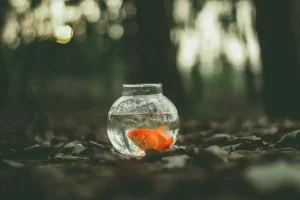
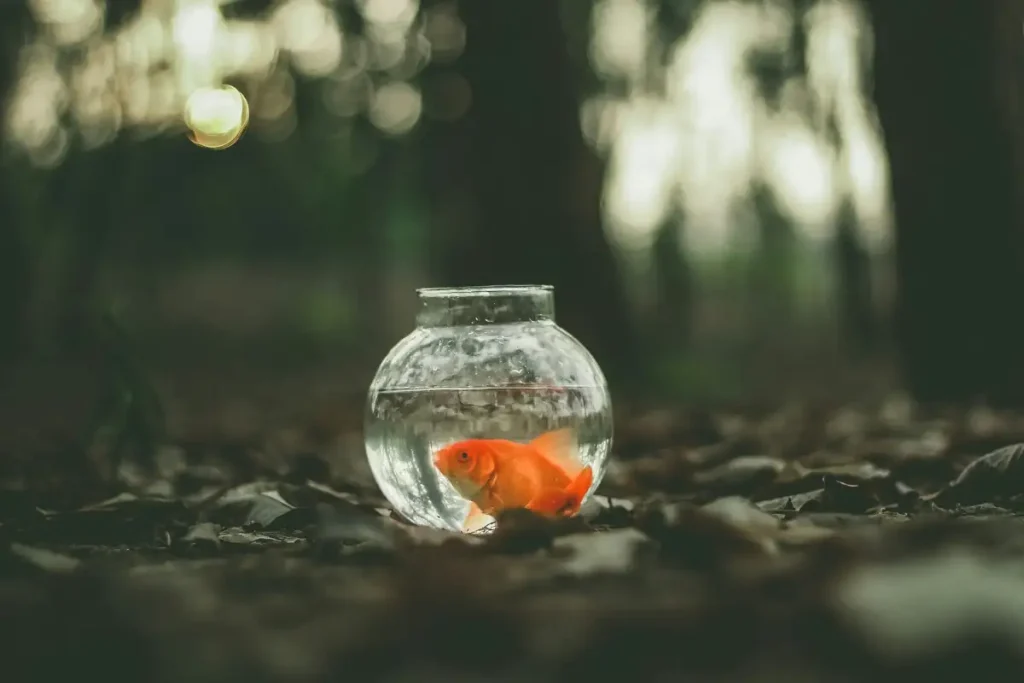
The passage of time brings to mind the same unchanging image: a goldfish swimming in the void of its bowl. It is silent, uncommunicative, and above all, undemanding, qualities that make it the ideal pet for those who seek convenience over care. Its well-being is reduced to outdated notions: it eats, it excretes, it swims, therefore, it must be fine.
The First Animal in the House
The goldfish is often the first animal to enter a household. It costs almost nothing and requires only a glass container, tap water, and a bit of feed. In more careless homes, even sugar or breadcrumbs are thrown in to cut corners. The child is momentarily satisfied, though a dog would likely have brought more joy, but it is the parents who are truly pleased, having minimized effort, cost, and responsibility.
Yet a goldfish is not a toy, it is a living being.
The Message We Send
By accepting the suffering of the goldfish, we teach indifference toward life. We ignore the need for even minimal well-being, the kind that should be guaranteed to any creature in captivity. In the tug-of-war between children’s desires and parental convenience, we create a hierarchy of animals, a shifting scale that reflects our emotional development.
Eventually, the desire to connect with an animal grows beyond possession, evolving into empathy, and with it, a hierarchy of affections that should guide our treatment of all living beings.
At the Bottom of the Rights Ladder
Goldfish live lives of quiet misery, forever confined to tiny bowls. They sit at the bottom of the domestic animal rights ladder, neglected and disregarded.
I was reminded of this when I read an article in which a journalist mocked a fine issued to a venue for keeping a goldfish in a bowl. Many municipalities have banned this practice. The suffering caused by desolation is plain to anyone with a minimum of awareness, but not to that journalist, who was only outraged by the penalty.
Beyond the Bowl: It’s Not About Scale, But About Meaning
Certainly, there are far more tragic cases than that of a goldfish in a bowl. But this is not about weighing suffering, it is about recognizing that the real difference is not between life and death, but in how life is lived.
Being born and dying are the beginning and the end. What truly matters is the quality of the journey in between.
Life is not simply heartbeat, breath, or blood, it is the chance to express natural behaviours shaped by evolution. This is true for humans and for fish.
The Certainty of Death, the Complexity of Life
Death awaits us all. Whether it comes suddenly or slowly, through illness or misfortune, is a matter of chance. But life, life is what we make of it: the sum of our choices, accidents, and indecisions. A kaleidoscope of light and shadow that defines our fleeting presence on Earth.
Death is not a destiny, is an inescapable certainty.
But the life of a goldfish is indistinguishable from death. It teaches no love. It teaches no respect. It makes the imprisonment of a living being seem harmless, even affectionate. And so, the goldfish dies, of stress, temperature shock, poor diet, or sheer boredom.
From Pets to Waste
Sometimes, people tire of this token of nature in their home. The goldfish ends up in rivers, or, more often, flushed away, discarded like trash.
The goldfish embodies the suffering inflicted through carelessness on too many animals without a second thought.
A Monument to the Forgotten
There should be a monument to the goldfish Carassius auratus, sold by the hundreds of millions over the centuries, bred and hybridized for no other purpose than to offer parents the joy of gifting a pet that requires neither time, care, nor money.
From there begins the evolution of captivity: from goldfish to Florida green turtles (bred in millions in Louisiana), on to hamsters, budgerigars, and guinea pigs.
A Lesson Not Learned
In this world, children do not learn about the rights of living beings.
They learn only about the unearned dominion humans claim over the weak.
(original article: Pesce rosso ovvero la genesi del maltrattamento by Ermanno Giudici, translated in English by Ethologicalmind.blog)